The Architecture of African IP: From Creator to Owner
A friend of mine, a story artist, once told me she’d written a bible for a show that later got made, minus her name on it. She wasn’t lying and she wasn’t exaggerating. She just hadn’t understood, at the time, that making something and owning something are two completely different jobs, with two completely different skill sets attached.
That’s the gap I want to talk about. Not the creative gap, Africa’s got no shortage of people who can make brilliant work. The ownership gap. The distance between the moment you create something valuable and the moment you actually control what happens to it.
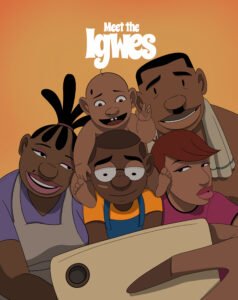
Meet the igwes cartoon
The Number That Makes This Concrete
Here’s a figure that stopped me when I first read it. An estimated $286 million in recorded music revenue goes uncollected every year in Kenya and Nigeria alone, according to industry data cited by the U.S. Patent and Trademark Office’s IP attaché, Katherine Hiner, at a briefing in Ghana in August 2026. That’s not money the industry never made. That’s money it made and then lost, because the infrastructure to track, register, and collect on it wasn’t there.
Hiner put it plainly. “Having a copyright in your work means little if there’s no practical means of enforcing your rights”. That’s the whole article in one sentence, honestly. A copyright is a piece of paper, or these days a database entry, until someone builds the machinery that turns it into actual money reaching your account.
Nigeria’s own enforcement numbers show both the problem and the early signs of a fix. Between October 2024 and May 2025, the Nigerian Copyright Commission confiscated more than $250,000 worth of pirated material, including a single April 2025 seizure of three shipping containers of books worth roughly $190,000, across 120 inspection visits to markets, schools, and printing facilities.
Attorney General Lateef Fagbemi framed it as the government “improving access to legal remedies for copyright infringement through enhanced investigations, interventions, seizures, and prosecutions”. That’s real enforcement. It’s also, by definition, playing catch-up on work that already leaked out uncontrolled.
What Owning Your IP Actually Looks Like When It Works
The clearest example I can point to of an African studio holding onto its own IP while working with a global partner is Kugali, the Lagos-based studio behind Iwájú, which premiered on Disney+ on February 28, 2023, as Disney Animation’s first outside collaboration of its kind. Kugali’s team described retaining “creative autonomy” throughout the partnership.
I want to be honest about a gap in the public record here. What “creative autonomy” means in practice, and what it means for who actually owns the underlying IP long-term, isn’t spelled out in the public coverage I could find. That’s not a knock on Kugali. It’s a symptom of the exact problem this article is about. Most African IP deals with global partners aren’t discussed in public in terms of ownership structure at all, only in terms of the partnership announcement. If the industry can’t talk openly about how ownership actually gets split, it’s hard for the next founder to learn from the last one’s deal.
What a Mature IP Economy Actually Produces
It’s worth looking at what happens on the other end of this, in a market where IP ownership infrastructure is fully built out. In the United States, IP-intensive industries contributed $11.4 trillion to GDP in 2024, representing 44% of private-sector output, and workers in those industries earned 130% more on average than workers outside them.
I’m not saying Africa needs to become the United States. I’m saying that gap, between an economy where IP ownership pays a real wage premium and one where $286 million evaporates every year before it reaches a musician’s account, is the actual size of the opportunity sitting in front of African creators right now.
The Pieces That Actually Build the Architecture
None of this gets fixed by telling creators to “know your worth.” It gets fixed by infrastructure, the unglamorous kind.
Nigeria has already digitized part of this through the Nigerian Copyright eRegistration System, which lets creators register works online rather than through a paper process that used to make registration a barrier by itself [4]. That’s a real, if small, structural fix. Registration alone doesn’t collect royalties, but you can’t enforce a right you never formally claimed.
On the training side, Netflix backed Triggerfish Animation Studios, the South African studio behind Mama K’s Team, Netflix’s first animated series out of Africa, to launch a Pan-African Story Artist Lab in 2021 aimed at developing local story talent. I couldn’t confirm a public figure for how the lab was funded or how many artists have gone through it since, and I’m not going to guess at either number. What I can say is that a training pipeline is a different piece of the architecture than a registration system or an enforcement raid. You need all three, people who can develop a story well enough to own it, a system that lets them formally claim it, and enforcement that makes the claim worth something.
The Actual Question
So here’s what I’d ask anyone building a studio right now, before the next partnership conversation gets to the table. If this project works, who owns the sequel rights? Who owns themerchandising? Who owns it in a jurisdiction where nobody’s watching closely enough to notice if you didn’t ask?
Creating the work was never the hard part for African talent. Owning it, formally, legally, and with the machinery to defend it, still is.
FAQ Section:
How much money does Africa lose from weak IP enforcement? An estimated $286 million a year in recorded music revenue goes uncollected in Kenya and Nigeria combined, according to industry data cited by the USPTO’s IP attaché in August 2026. That figure covers music alone, not film, animation, or publishing.
What did Kugali retain when it partnered with Disney on Iwájú? Kugali has publicly stated it retained “creative autonomy” throughout the making of Iwájú, which premiered on Disney+ on February 28, 2023. The specific ownership split of the underlying IP has not been detailed in public reporting.
How does the Nigerian government enforce copyright right now? Between October 2024 and May 2025, the Nigerian Copyright Commission confiscated over $250,000 in pirated materials across 120 inspection visits, including a single $190,000 container seizure in April 2025. Creators can also register work directly through the Nigerian Copyright eRegistration System.
What does a mature IP economy actually look like? In the United States, IP-intensive industries contributed $11.4 trillion to GDP in 2024, 44% of private-sector output, with workers earning 130% more on average than those outside those industries [1]. That gap illustrates what’s structurally still missing in most African creative markets.